youth peace media initiative in Africa

Uncategorized

a peace of light

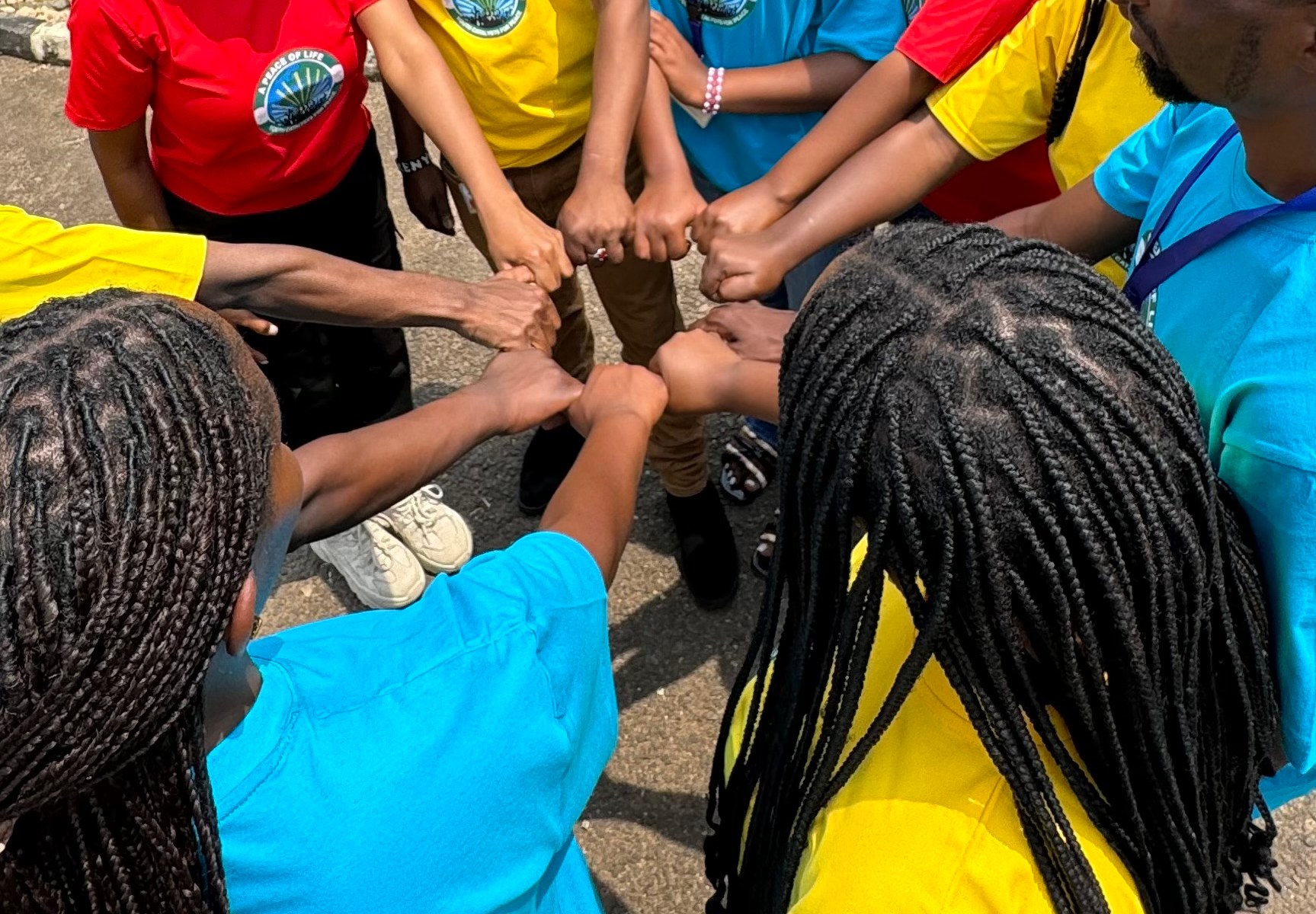
Pictured: Hope lights the way. Club Unity (a peace club started by youth in Rwanda) ends a day of community service, repairing homes of Genocide orphans and widows, with a time of testimony, prayers, songs and a commitment to peace, as  part of their 18th Commemoration of the Genocide Against the Tutsi where an estimated 1 million people were killed in a 100-day period (April – July, 1994).

Club Unity was started by youth who attended the first peace camp (Nov. 2010) offered by A Peace of Life in partnership with AEBR Youth. Today anywhere from 100-200 youth meet on Saturdays at the small, local Baptist church in Mubago and they have started a variety of peace-building activities including microcredit. As part of the 18th Commemoration of the Genocide Against the Tutsi, they planned a special day of community service and testimony.

Anthony, one of the Club Unity founders, forwards this account of their commemoration day, held Sat, Apr. 28, from 6 am to 10 pm:

Today, very early in the morning, we went – almost 37 people, most of us youth – to the hill located in our village to dig and transport sand to use to repair houses of Genocide orphans and widows.

After noon, at 14:00, we met in the garden at Mubago Church with many people to have dialogue about our Rwanda history. After this time of sharing, 4 widows of Genocide received the gift of one goat each from our Club. We did this action as a sign to show that we have taken up the challenge to change from our country’s bad history to a new future. We want to treat each person as created in the image of God.                                                                                                                                                                                                                               Commemoration During the 100 days of Commemoration of the Genocide Against the Tutsi, our Club Unity will collect money to buy three more goats to help three more widows (for a total of 7 to be helped). We will also have a voluntary day of work each month during this time to keep helping the Genocide survivors. We do all these things because we want to look to the future – to go ahead without stopping – to heal the grief of our relatives. 

See more photos from Club Unity’s day of commemoration and community service.

Trauma continues to be big issue faced by youth, and people of all ages, in Rwanda. A Peace of Life has arranged to have Anthony continue to receive training in peer-to-peer trauma counselling (graciously offered by Paulette Baraka, one of our volunteer professionals who conducted a trauma and mental health workshop at last year’s peace camp). See more photos.

We are so inspired by the courage and commitment of youth like Anthony and his Club Unity members. We hope you are too! Fundraising is now underway to help more youth like Anthony have an opportunity to attend Peace Camp (the next one is scheduled for the last week in November 2012). Please help us today.


a peace of the homeland

April is a time when painful memories surface in Rwanda. As part of the 18th Commemoration of the Genocide Against the Tutsi, we feature this very special guest post by a young Rwandan courageous enough to bare his soul, sharing his personal experience and hope for his homeland.

Through Forgiveness, Rebuild the Future

A reflection and poem by Timo

I remember that President Habyarimana kept referring to my country, Rwanda, like a glass full of water: “If the glass was already full, how could you pour more water inside? If you pour more water and the glass is full, water will flow over, everywhere.”

What he meant was that before Tutsis could return home, those that were in the country would have to go. Before we could return, more of us were supposed to die so we could fill the place where they were, because there was no place for us.

Following the genocide, the newly established government encouraged those who had killed others to ask for forgiveness, while asking those who had lost their families to extend their forgiveness and try to move forward. Those Hutus that fled into Zaire (currently Democratic Republic of Congo) and other surrounding countries were asked to come back and help rebuild the country, even though some of them had participated in destroying it.

At first, it was difficult for both sides to show understanding towards each other. But over time, people found that to be able to build the country, they needed to work together and live together in peace, even though others still harbored the same mindset to pull the country back into darkness.

Let us remember what happened in 1994; the destruction of the country, and the overpowering smell of death everywhere. When we compare that with our homeland today, merely 18 years after the genocide, the country has been rebuilt. How about we keep moving in this direction? Let us show them, those who have destroyed, and have in mind to destroy again, that we are conquerors.

The way I try to forgive is just to try to move on, to go to a new page in my life, to take another step forward. If I keep reminding myself, keep going through the pain, keep having conflict with the people that have killed my family, I will never take another step, never go to another stage of my life. I will never forget what happened, but try to understand the situation, to be able to move on with my life and not let the others’ actions in the past be the barrier for me to go to another place. I can do more. I can prove more. When you fail, and someone wishes you to fail, he will be happy, because he is successful. But if you succeed in what you were supposed to fail, he will be unhappy, because he or she didn’t find what was expected. This is what we are doing, not out of revenge. I do it for my future. I do it for the people who will come after me, like my children, so they will never face the same problem as I faced.

Return to the Homeland 

Return to the homeland, site of destruction

Smell in the air, bodies stacked where once homes were

Families, histories, disposed of and drained with sewage

Memories lost, replaced with those that awaken our tenuous rest

Distinction of once-measured faces; us and them, them and us

Tension and fear that the tide will turn backwards

Over hatred and resentment that our presence made the glass flow over

But we are the same in belief and culture, home and hope

Fight not for revenge against them, but to turn the page for us

Look back to family lost while stepping forward for our children

When failure is to be defeated, resistance will be to succeed

Forgiveness because we choose never to understand hate

Assured that only God will ever know the purpose of this suffering

With strength, we will our hearts to change chapters

The dawn of spring brings with it the return of blood in our minds

But with the absence of hate in this eternal loss

And hope for our future when we accept and forgive.

Read more commemoration reflections

About the photo: One of the rivers in Rwanda said to be the source of the Nile. During the 100-day killing spree of the Genocide, rivers became clogged with dead bodies. The river is a poignant reflection of the intense pain behind the intense beauty of the country.

Coming up: We’re getting ready to launch a national contest in Rwanda to pick participants for Peace Camp 2012. We hope to bring 50 youth together for 10 days of storytelling and peacebuilding through creative arts and the media. Learn more how you can help make this happen.

See what happened last year at camp.


a peace of water my world

Another Friday Fun Photo – Guess what happened split seconds after this photo was taken? Lots of fun – and soaking wet bodies – as camp leaders and youth splash the water around, enjoying some refreshment after an afternoon of planting trees and picking up garbage on the grounds of our host school. It was all part of a workshop on peace and the environment at last year’s peace camp.

Planting trees at peace camp 2011

Planting trees is an important part of helping to conserve the natural, beautiful environment of Rwanda as well as replace trees used as firewood for cooking. Every November, Rwanda launches a national tree-planting campaign to encourage environmental conservation and awareness.

Many youth peace clubs, including Club Unity in Mubago, are including the planting of trees in their peace-building activities. They are finding that it’s an easy and practical way to bring everyone in the village together to do a community activity as well as open a way to talk about other crucial issues they can work on together. Sometimes there is even a sharing of personal stories and an opportunity to offer forgiveness and build reconciliation among neighbours. It’s inspiring to see youth lead the way in this ground-breaking work.

The peace camp is an annual event offered by A Peace of Life with local partners such as AEBR Youth. Plans are underway for Peace Camp 2012. Help sponsor youth peace-building in Rwanda by making a donation today.

As part of celebrating World Water Day, we’re also pleased to present a multimedia presentation on water. It was created by youth who participated in a photography workshop at peace camp 2011. The workshop was facilitated by Johnny Lam, a professional documentary photographer who volunteers his time and expertise with A Peace of Life. Johnny has launched Gafotozi, to help empower vulnerable youth to use photography in peace-building and storytelling. Enjoy the show!

*Photos in today’s post taken by some of the youth from the photography workshop


a peace of photos

love 4 life

Photo credit: Lene Amstrup-Jensen

Pictured: The gafotozi exhibit at Love 4 Life,  a youth arts event held by A Peace of Life in Kacyiru (Rwanda) as part of World AIDS Day 2010. Two of the photo essays focus on the personal impact of HIV and AIDS. They were created by 5 youth who participated in our first photography workshop in 2009 which resulted in the founding of Gafotozi by Johnny CY Lam, documentary photojournalist affiliated with A Peace of Life.

In December 2011, we returned to the same village where we held the first workshop and stayed with one of our gafotozi families most impacted by HIV. One morning, Johnny shot an incredible series of photos on the waking moments of the family – where mom and two of her children must take antiretroviral medication to remain alive and well.

The resulting photos became a powerful and moving photo essay by Johnny called 13: Living with HIV in Rwanda. The first 13 minutes of each day.

On March 16-29, 2012, his remarkable exhibit, along with photos from the gafotozi, will be on display at The Department, 1389 Dundas St. W., Toronto. Plan to attend. Contact us for more info.

As part of this special event, A Peace of Life will present short films by young filmmakers of Almond Tree Films Rwanda which show another challenge facing youth in Rwanda today – coping with the legacy left by the 1994 Tutsi Genocide which nearly destroyed their country.  While much progress has been made over the years, trauma, mistrust and fear linger. These young filmmakers share stories of the pain, hope, love and courage behind peace and reconciliation. We also look forward to some surprise guests!

photo credit: Johnny Lam Photography

Pictured: Yves Montand, one of the young filmmakers of Almond Tree Films Rwanda, introduces the short film, Tears of Hope, at the opening of Peace Camp 2011. This film was produced from a script written – and acted – by youth who attended Peace Camp 2010.  For the past two years, Almond Tree Films Rwanda has trained youth in filmmaking as part of the annual peace camps offered by A Peace of Life in partnership with AEBR Youth.

More news to be posted shortly on Peace Camp 2012!

Stay in touch on Facebook.


a peace of little things

by-anthony

Little things make a world of difference!

I love this photo of a child cleaning the path in front of his house. It was taken by Anthony, one of the youth in our programs. It reminds me of the importance of caring about the little things – and little ones – that often go unnoticed. Ironically, it’s the little things in life that can make the biggest difference, good or bad, over time. What we say and do makes an impact on others. Through our projects, we strive to encourage youth to be a positive influence in their world. To understand that a big part of developing their own potential is in how they treat and care for others along the way.

Anthony is such an example. After the first camp (in 2010), he went on to start a peace club back in his village - Club Unity.  On any given Saturday, anywhere from 100 -200 of the club members meet at a local church. Most have grown up in child/youth-headed households. They have become known in the community – even asked to help resolve difficult issues, such as a recent land dispute.

This past November at our second annual peace camp, Anthony and several other youth gave presentations on the peace clubs they have started. They shared their plans and progess as well as the challenges they continue to face. Top of the list was the need for more training and opportunities like the peace camp where they can meet, share and learn from each other. We have started planning for peace camp 2012!

After peace camp, Johnny Lam (a documentary photographer and partner of A Peace of Life) and I were thrilled to spend a week with Anthony and his family and the gafotozi back in the village where we held our first photography workshop. While we were there, we also had the chance to meet with the new peace club, Club Unity and hear of their plans which include expanding the savings and loan group they have started.

Anthony and his sister, Princess, were among the first group of young photographers to be trained by Johnny – who has since launched Gafotozi (which means young or small photographer in Kinyarwanda) to promote peace and youth empowerment through photography. The Gafotozi continue to be mentored by one of our amazing local volunteers, Timotee, a young teacher who assisted in the photography workshop at peace camp as well as led a session on entrepreneurship. We look forward to posting more of the work of the Gafotozi throughout the year!

Sneak peak: A photo by Johnny Lam of the Gafotozi at work on their peace camp project – a multimedia presentation. Stay tuned for our premiere of this piece during World Water Day!

In addition to photography, other workshops at peace camp included drama, film, sports for peace, community development and trauma/mental health. See more peace camp photos.

But the most powerful workshop at camp was the trauma/mental health session facilitated by Paulette Baraka.

“I thought I was the only one who had such big problems,” later shared Olivier, one of the youth. “At peace camp I was amazed to hear that others had the same problems in their life. It was really such a big help for me, you can’t believe how much. It changed me so much.”

Olivier is an example. Like his friend Anthony, he has had to cope with the impact of AIDS on his family. He dropped out of school to work and help support his mother, a widow who is HIV positive. He recently started his own small business and is one of leaders of Club Unity. He is also one of the youth trained as a Gafotozi.  His first photo essay was on the impact of AIDS in the family.

Pictured: Impromptu computer class in the home of our hosts (Anthony and Princess, top right)

The gafotozi loved learning some computer and social media skills - thanks to Johnny’s training, wonderful donations of laptops and cameras, and the recent arrival of electricity in the village! We simply loved being with them and learning more about their daily life. We can’t say enough about their impact on us. They opened up their homes, and their lives. From early morning walks for water, to afternoons scrubbing the red mud off shoes, to hanging out late at night talking, we now have a deeper understanding and love for each other.

It really is a privilege to work among these youth. They inspire us. We’re proud of all that they have already accomplished. Their energy and hope is contagious as they persevere in the midst of big challenges. We hope they inspire you too.

We are now working with Paulette to develop and provide a workshop on trauma & counselling for youth. We hope to offer it to Anthony, Olivier and Club Unity in March, in the weeks leading up to the National Commemoration of the Tutsi Genocide, a time when much trauma and painful memories resurface.

We are also planning for the next peace camp to be held later this year and continuing to help fund and promote some of the events and media in the works by our local partners and youth peace catalysts.

Please make a donation today and help to support us in all of the little things we attempt to do this year among all these courageous youth in Rwanda. Together, we are making an impact!

Posted by Laurena Zondo, founder, A Peace of Life


a peace of a new year’s wish

a peace of lake kivu

Dive into the new year with A Peace of Life in Rwanda!

Merry Christmas and happy new year…Noheli nziza n’umwaka mushya muhire…to all of our youth peace catalysts, volunteers and supporters. You truly are amazing and we can’t thank you enough! May we continue to inspire each other to fill our world with love, hope and peace.

Pictured: A welcome break for youth at Lake Kivu after a full week of intense training at Peace Camp 2011. Plans are now in the works for the next Peace Camp and other youth activities in 2012. Looks like we’re heading into another challenging and exciting year…can’t wait to dive in! Join us!

Photo credit: A Peace of Life/Johnny Lam Photography


a peace of Gisenyi

peace camp 2011

AWOO….peace camp 2011 in Gisenyi was a big hit, especially the afternoon we walked to Lake Kivu – for most of the youth participants it was their first trip to the beach and a chance to try swimming and playing in the water. It was a wonderful way to end the morning session on trauma and mental health which was led by Paulette Baraka, a professional counsellor and psychologist who specializes in issues faced by orphans and vulnerable children. Paulette’s workshop was one of the highlights of camp.

Another highlight was the workshop on photography led by Johnny Lam. Five new gafotozi were added to the original crew. During the week they worked very hard to develop a multimedia presentation on “water” which they then premiered on the closing night of camp.

We also enjoyed the presentations of youth peace clubs including Solace Sowers, BBA, Club Unity (Mubago), Peace & Love Proclaimers.

We thank all of our donors and supporters who helped us to bring together double the number of youth from the first camp (held in 2010 in Nyange). This year, we were very happy to have almost 80 youth from across the country (and even a few participants from the Congo) for a week of learning, mentoring and fun through a variety of peace activities including drama, photography, scriptwriting and sports.

More news and photos from camp will be posted shortly.


a peace of the prize

A Friday Fun Foto…..girls in focus

We post this photo today in honour of the three women (two of whom are from Africa) who were awarded this year’s Nobel Peace Prize. Congratulations, President Ellen Johnson Sirleaf (Liberia), Leymah Gbowee (Liberia) and Tawakul Karman (Yemen)! It’s a great acknowledgement of the crucial role of women in peace-building and community development. Through your work, you’ve highlighted the need to address issues of poverty and gender inequality as part of the peace process.

Pictured (left to right): Prencesse, Claudine, Germaine – three inspiring young women who are peacebuilders in Rwanda, and members of our gafotozi, learning to use the arts and media for social change.

Photo taken by Johnny Lam, documentary photojournalist, as part of our first photography workshop. Next month, he and the gafotozi will be at peace camp and also back in the village, working on more photo essays. We look forward to posting their new creative!


a peace of land

Land is at the root of most of the conflict in our world - not only disputes in who has the land or who wants control of the land, but also environmental and connected social justice issues, such as how we care for, and share in, the earth and all its resources.

We post this photo today in tribute of Wangari Maathai, an inspiring Kenyan woman who was awarded the Nobel Peace Prize in 2004 for her work on the environment, women’s rights and transparent government. She passed away yesterday, on September 25th, but leaves behind a remarkable legacy including the founding of the Green Belt Movement which has planted an estimated 20-30 million trees in Africa.

The photo was taken by Germaine, an inspiring young girl in Rwanda who shares Wangari’s love and concern for peace and a healthy environment. Germaine loves to garden and hopes to become a doctor. She took this photo as part of her essay on “our relationship with the environment.” Her essay was one of a series of village photo essays by the gafotozi – youth who participated in our first photography workshop in 2009. They live in a region where large numbers of children have been orphaned by the Tutsi Genocide as well as AIDS. Many of these children became heads of their household and today they continue to struggle not only with poverty but also family land and property ownership issues.

Land issues will be some of the case studies to be explored by youth in our upcoming peace camp, to be held Nov. 20-26, in Gisenyi, a border town (Rwanda and DR Congo). Youth will put into practice some of their critical thinking and creativity skills to develop innovative and engaging ways to open dialogue and build common ground on crucial issues within the community, for peace and development.

Youth will also plant trees near our host school and mini gardens (vegetables-in-a-sack) for orphans as a meaningful expression of love and care for the environment and those most in need in the community.

Thanks, once again, to all who have contributed time, money and support to this youth peace media initiative. Please keep checking this blog to see your wonderful support in action!

p.s. The gafotozi will have the opportunity to train, once again, with Johnny Lam, a volunteer documentary photographer from Canada who led the first photography workshop. In the coming months, we look forward to posting some of their new photos and having an on-line gallery for purchase.


a peace of our daily bread

family supper

Famine doesn’t happen overnight. And you really don’t have to look very hard to see it coming. The writing has been on the wall….on the table….signs everywhere, that something is wrong and getting worse. For some families in East Africa, it’s been coming a long, long while now, with a series of droughts, wars, conflicts and all sorts of injustices adding insult to injury.

The slide from one meal a day to no food a day happens more often than we’d like to think in our world. Tragically though, it’s not until the terminal phase, when we see the skeleton bodies - children on the verge of starving to death or already succumbed – that the story seems to finally get out, capture our attention, however briefly. And once the story is out there…what is our response going to be? How long before we change the channel?

Cry me food….cry me justice.

I was appalled reading some recent comments posted to articles and stories that did manage to meander their way into the news and onto the blogs. Many of us seem content to simply rationalize the problem and the response away…..”they should be taking care of their own people”….”we don’t want to help the terrorists”….”the money will just get wasted”….”there’s too much corruption”….”I can’t make much of a difference”….”it’s not my problem”….

Really? But what if that was your child starving to death in your arms? My child buried on the run? I think we would be a lot less lethargic, less apathatic, less judgemental about the how’s and why’s of the crisis, and simply beg for a response. Any response. Now, please!

Lots can be done. Lots is being done. Lots more needs to be done, both now and long term with community development and leadership development. The training and empowerment of youth who will lead differently, live differently, share resources, work for peace, intervene, respond, will make a big difference. You can support them.

At our next peace camp, coming up in November, we are focussing on the issue of food security and entrepreneurship (including skills development in a small business) as a crucial part of peace-building. We hope to have a special guest share some of his experience from Dadaab, one of the world’s largest refugee camps, which has recently been overwhelmed with families fleeing from the famine in their homeland. Stay tuned for more news.

Please keep the families impacted by famine in your prayers and make a donation today to an organization involved in the relief.

About today’s photo: Anthony, one of our gafotozi, took this photo as part of his photo essay on village life. He was also one of the young photographers to help document our first peace camp. One of the outcomes of the peace camp was the formation of several peace clubs across the country. Anthony helped to start a club in his village in Kibungo region. Another club, Solace Sowers for Peace, began in Kacyiru (Kigali). On Sunday, July 24, they will be holding their second peace concert and raising funds for famine relief. Learn more.


a peace of a child’s day

Today is International Day of the African Child. Sweet!

It’s an important day to commemorate the bravery of students who took to the streets in peaceful protest in Soweto, South Africa over the quality of their education and the injustice of apartheid. Their courage was costly as hundreds of students were massacred, June 16, 1976. But their legacy remains. The African Union has created this special day to remember – and to act – to improve life for all children in Africa. Some of the most vulnerable are those growing up as orphans and living on the streets. This year the International Day of the African Child brings urgent attention to the plight of street children, estimated to be over 30 million across Africa. Learn more 

A recent film, Maibobo,  poignantly presents life as a street child.  It was created by a young Rwandan filmmaker, Yves Montand, who has a passion for using film to highlight pressing social issues.  He and some of the other emerging talent at Almond Tree Films Rwanda have worked as volunteers with youth from our peace camp to create their own short film about the life of an orphan. We’re just days away from the release of Tears of Hope, the rough cut!

Commemorate Day of the African Child! Take our Sweet Challenge and support youth who are catalysts for peace and development today in Africa.

Photo credit: Anthony Munyaneza, one of the gafotozi, who participated in our first photography workshop in Rwanda. The photo was taken as part of his essay on village life. Last November, he was one of the participants in the peace camp and one of our official photographers. After camp, he went on to form a peace club in his community. He was recently featured in mosaic.


a peace of the team

Another Friday Fun Photo: Go Team Go! Tugende muze Tugende!

Pictured: Club Courageous in Gisenyi – quite possibly some of the next U-17 players for Rwanda! We love your team spirit – you’re already champions – keep your hopes and dreams alive!

Next week FIFA U-17 World Cup begins in Mexico and guess who’s there? Congrats Rwanda U-17,  the first team from Rwanda to make it to a FIFA world championship. Follow all the action online  - Rwanda’s first big game is on the 19th, when they take on England.

A Peace of Life is planning a fun youth event in Kacyiru (Rwanda) as part of U-17 World Cup. Stay tuned for more exciting news!

We also kick start planning of activities for our next annual peace camp, which will include learning on the use of sport and media to build common ground, peace and unity. One great example that’s inspiring us these days: The Team, a sports soap opera, that’s a ground-breaking, multi nation television project, as well as other innovative, locally written and produced projects of Search for Common Ground. Play on!

Join our team. Make an online donation today and support youth working for peace and development in Africa.


a peace of youth news

Friday Photo: A big awooo…Vuga awooo nini!

We celebrate the launch of Youth Catalysts for Peace newspaper in Rwanda this week, one of the outcomes from the first youth peace camp held last November in Nyange by A Peace of Life and AEBR Youth. Plans are now underway for Youth Peace Camp 2011, Nov. 20-26. Make a donation today.

 And a big awooo to Gateway Youth Group, Victoria, BC, Canada for your prayers during last night’s event as part of our first Solidarity Tour to raise funds for more youth peace media initiatives in Rwanda including the next youth peace camp.

If you’re in the Vancouver Island area, join us for Solidarity Tea:

2-4 pm, Sat., May 14, Duncan United Church,

246 Ingram St., Duncan, BC


a peace of memories of mom

orphans commemoration

For 100 days in Rwanda, from April to July, a candle burns…from the flame that stays lit for the entire period at Kigali Genocide Memorial Centre to small commemorations across the country such as this special day of mourning at INATEK (in Kibungo), April 29, by student survivors and orphans of the Tutsi Genocide. The day was organized by the local chapter of AERG, an association created in 1996 to become a new family for all orphans of the Genocide. Each university and high school in Rwanda has an AERG association.

One of our partners, Basic Brilliant Africa (BBA), participated in this day. “We want to be with them at this time and to do some thing like a symbol of love and solidarity of remembering together what happened,” noted BBA President Jean Paul Ngiruwera.

Join us on Mother’s Day and for the remaining days of May, June and July, as we stand in solidarity with youth in Rwanda who have lost a mom, a dad, and other loved ones. Make a donation - a little gift of motherly love that will send some youth to peace camp. See what happened at the first peace camp.

Memory is important in the peace and reconciliation process. See more stories.

We also stand in solidarity with those who continue to suffer from violence and remember moms like Kavugho Kalupao who 7 years ago saw all of her children, and her husband, killed before her eyes. She is the sole survivor of her village of 720. She lives in the DR Congo, in a region plagued by years of war and where rape continues to be a tactic, a weapon of intimidation and destruction that was used in the Genocide and still used today. We thank her for courageouly sharing her story to encourage others in her situation.

It’s a difficult story to share, but she truly is a mother, and a woman, to honor on Mother’s Day.

“They laid us all down [in the village] like firewood and I said ‘Please, let me pray to my God’,” she recalls. She prayed and they proceeded to rape, torture, beat and cut her with a panga (machete). “They left me, thinking I was dead. After many hours I regained consciousness and started moving, crawling on my belly, because I couldn’t stand up.”

Somehow she survived, hiding in the forest for a whole month, without medicine or medical treatment. She eventually made her way to Goma and met a pastor who helped her. “He started to counsel me so I did not go crazy. I’m surving today because of this pastor, otherwise I don’t know where I would be.”

It took several years for her to start to come to terms, emotionally and spiritually, with what happened. “God is with me…I forgave them…they didn’t know what they were doing,” she now shares, noting the impact of the counselling, love and support of this pastor and others at Oneness Development Institute. “They told me that I am special person in God’s eyes…that I survived for an important reason…I realize that I would be hurting myself [if I didn't forgive] and that my God will heal me and help me.”

Today this brave woman helps other women, especially teen moms, who have experienced the same humiliation and brutal hurt in their lives, often shunned by the community, even thrown out of the family, after their ordeal. With the training and support of Oneness Development Institute, they have formed an association and started small businesses of selling mandazi (African donut), sugar cane, bananas, tomatoes and peanuts. They have also started a group savings and have plans to learn sewing and to start a tailoring business. A Peace of Life is one of their partners and we hope to bring some of these youth from the Congo to the next peace camp where we will be focussing on entrepreneurship, to help youth develop business skills to combat poverty in their family, development that’s crucial to the peace and reconciliation process.

Stop the cycle of violence with a gift of love. Help train and mentor youth who are working for peace and development in Rwanda and the DR Congo. See more inspiring stories of youth working for change.


a peace of commemoration

Scene from a short film soon to be released written by youth at peace camp and produced by Almond Tree Films Rwanda

During April, Rwanda becomes the country of a thousand tears as the nation gathers to remember and mourn those tragic days when society failed – when over 800,000 (a conservative estimate) people were slaughtered in the Tutsi Genocide within a mere 100 days. The scale and intensity of this time remains unfathomable. And while today there’s an uneasy peace, so much remains unsaid. For some, it’s still too painful to put into words. For others, there’s a desire to try and forget and move on. And then there are those who still attempt to bury the truth, denying either their role or what happened. More truth-telling is needed for reconciliation.

 It is not easy. There is no quick fix when trust has been broken. Reconciliation is often a slow and painful journey that differs for each person. Time and grace are the best gifts that can be offered - time and grace to allow each one to heal in his or her own way. Simply telling someone, “You must forgive,” is not helpful. Forgiveness emerges when one is ready and able to make peace with one’s own past. Once you have this inner peace, you are then able to reach out to others. It’s a journey that starts with love.

“Love is a catalyst for peace…it sets you free yourself,” commented one of the youth at peace camp. She and the other youth at camp were inspired by the story of a group of students who made a courageous stand for unity, at great personal cost, three years after the genocide. Love is at the root of their story. “We were training to love each other,” noted Phanuel, one of the survivors. Read more about the Nyange national heroes

Memory is important to the peace process. Stories must be remembered and shared for more understanding and common ground. Commemoration, in spite of being so difficult, is an essential time to cry together, to remember together, but also to commit anew to working together. It’s a time to shed a thousand tears of hope for a better future where all may live together in true peace, recognizing the value and dignity of each person.

It’s the message behind Easter, where we encounter the source of true love, the God of all creation, who sent his only son, Jesus, to show us the way. Through his death and resurrection all may be reconciled to God and to each other. The 1994 Genocide against the Tutsis occurred on the eve of the Easter season. A soul-wrenching reminder of the battle raging between good and evil in our world. Are we complicit? Complacent? Or committed to not be overcome by evil, but rather overcome evil by doing good?   

A group of youth have committed themselves to doing just that. They call themselves Youth Catalysts for Peace. Learn more

Help sponsor Peace Camp 2011 where we will be working with youth on skills development in conflict transformation including anger management and trauma counselling and sharing more stories through drama, song and dance.

Note: The photo in this posting is an outtake from a new short film, Tears of Hope, soon to be released by Almond Tree Films, Rwanda. It was produced from a script written by youth at our first peace camp (held last November) to highlight one of the issues they felt most strongly about: the plight of orphans who are taken into other people’s homes. Other short films from Almond Tree Films, Rwanda, such as the powerful Long Coat, are also available. Contact us to book your own special showing or peace camp presentation.


a peace of heroism

Phanuel sits at his school desk where he was that fateful day when rebels burst in and starting shooting students. On the floor you can still see the grenade hole.


Phanuel Sindayiheba is a survivor – and a national hero. He will never forget what happened, the scars remain etched on his body and in his mind. It was March 18, 1997, three years after the genocide. He was studying at secondary school in Nyange, a region riddled at that time with unrest as rebels waged their battle against the new government. Buses were stopped and burned. People intimidated. And then one day, an attack on students.

Last November, Phanuel joined us at peace camp for a memory walk to his former school where the attack took place. He shared some of his story. Here are some excerpts.

The shock is still there, flashbacks, when I go back to that event. In 1995, after the genocide there were bodies everywhere, you could see people’s wounds and trauma, many of the perpetrators were still living in the rural areas and not yet in jail. In 1996-97, the rebels were still fighting against the new government and in this area you could hear the bullets and bombs. 

At school, we were from different backgrounds — children from Hutu families, where in those years many felt that a Hutu was equal to a genocide perpetrator so children from those families were ashamed of being Hutu; children from Tutsi families who were traumatized; and children who were from Burundi, Tanzania, Uganda, Congo, who had never lived in Rwanda and grew up in refugee camps with stories about a bad Hutu who kicked them out of Rwanda. So you take all these children from different backgrounds and put them in one school, let them eat together, fetch water together, sleep in the same dorm, sit on same bench.  At first, we stayed within our small groups – Burundi with Burundi, genocide survivor with genocide survivor, those with fathers in jail. But after three years, we had become one.

On March 18, 1997, it was around 8 pm, the main gates were locked, we had finished dinner and some of us were back in our classrooms reviewing our notes. I was in Class 6. We started to hear gunshots, but thought it was nothing big, that it was just rebels fighting soldiers. But after 15 minutes, the noise kept increasing instead of reducing, and we wondered what was going on. Then we saw fires outside and bullets started to hit the windows. I told everyone to lie down on the floor so bullets wouldn’t hit us. The bullets kept increasing and all the windows were broken. After a few minutes, it stopped and then three young men with machine guns burst in. They tried to disguise who they were, wearing both military and civilian clothes, and hid their face and eyes. “Do you know me?” asked one of them in a crazy, crazy kind of French accent. He looked like the leader. 

One of us said, “We don’t know you.”

Then he said, “You will see me, but before you see me, I want you to help me, to facilitate me with my job. Hutus on the right side, and I know here we have Tutsis, so Tutsis go to the left side.”

We all heard him clearly and we knew what he wanted. Everybody kept quiet. So he repeated his command a second time.

“We do not have Hutus or Tutsis here, we are Rwandans,” said one girl, Chantal.

Thinking that she was confused, they went outside and threw two grenades inside, into a small room like that. Some students were blinded, others had their legs cut off, others were crying.  

The first grenade actually created a big hole in the floor. The second grenade fell on my back.

They wanted to intimidate us, to show us that the situation is serious, that the one who was Hutu or Tutsi should decide immediately whether to separate. Then they came back inside the room and gave the same order. “Hutus aside, Tutsis aside.”

There was a young man who always sat in front of me. He had survived the genocide, just he alone with his brother, while the rest of the family was destroyed. We used to call him the philosopher, and he said to the rebels, “We have already told you, we are not Hutus or Tutsis, we are Rwandans.”

 So they shot both him and Chantal immediately, in that same moment. When he replied that way, even after they had thrown in grenades, they realized that nothing would change our minds and they started shooting us, row after row. One of the rebels guarded the door so no one could escape.

I was in the third row. A grenade is the worst thing, if you see how they prepare brochettes, my back was like that, and I had this thought to just raise my head from under the desk so they shoot me and I die. But then I had another thought. Something else inside my mind that said that this would be suicide, please, don’t stick your head up. Five bullets hit my arm.

Some details from this night I’m not going to say here, but when they shot us, a girl asked me to pray because we are going to die. We prayed and I asked them to remember the word we read in Hebrews 12:14, to be at peace with everybody.

Another group of rebels went to Class 5.  When they got the same answer as the one we gave, the answer was given by Helen, a girl whose dad was in jail suspected of genocide crimes, they got mad immediately. As one of the rebels grabbed her she said, “Are you going to kill me, and yet I know you.” Realizing that she could identify him, he shot her. Another student, Valence, who had actually lived with soldiers as a child solider, but was back at school, tried to stand up and take the rebel from the back, to save Seraphine, another girl who the rebels recognized.  They killed him, too.

Students in the other classes ran and hid down in the bush. So the night passed like that. Six students died, many others were badly injured. Once soldiers in the area realized that rebels had attacked our school, they came to help us. All night they and other students and people from the community took care of us. In the morning we were loaded into local taxis and taken to hospitals. Because of the extent of my injuries, I was in hospital after hospital, for a whole year. Some students returned to school after two weeks, but others were too traumatized to come back. Later on the Government recognized what we did and made us national heroes.

Many of my classmates still suffer today from their wounds, crippled in their body or psychologically wounded. In 2002, we started an association called KOMEZUBUTWARI, Continue Being a Hero. We’re trying to do our best to promote peace and to help youth become the peace makers. We also do advocacy for those who are blind or crippled, but would like to continue to study.

Youth ask Phanuel many questions about his experience

Here are just some of the questions youth had the opportunity to ask.

Youth #1: You told us about being in different groups, from different backgrounds. How did you manage not to separate yourselves?

Phanuel:  There are three things that helped us to become one. The first one is the personal values you should have, but also important is leadership. We had an old guy who was in charge of religion, a chaplain, and his slogan was, “Do the good things so that evil may be destroyed” and there were some teachers and parents who were good examples, encouraging us to love each other and help one another. The second is the power of the word of God. I was one of the leaders of a worship group where Catholic, Protestant and whoever else wished, would gather together, and we kept stressing peace, love, unity. We became strongly united. After three years, nobody wrote a bad message in toilets. In the very beginning, you could see these things, but not after three years. The third thing is the government policy of unity and reconciliation, to live at peace with everybody. We were motivated by the way they looked at things.

Youth #2: I want to really understand that power that animated you.  The genocide was just a few years back so the wounds were still fresh and there was that bad spirit, tell us, practically, we want to know, practically, how you managed to have that courage?

Phanuel: Besides the things I just said, I am a Christian and there is my family education. In my family, we didn’t have problems between Hutu and Tutsi, and during the genocide I saw people helping each other so I could not personally tolerate somebody killing a neighbour. So the reason I didn’t stand up, it’s my education from my family, the experience I’d seen in the genocide and the word of God that was in me. I was a youth leader, and if I preached that people should live in peace, I could not stand up. In Class 5, Helen was also reading in the Bible that night to students, from Romans 8, where it talks about what can separate us from the love of Christ. Is it death? Is it persecution? Is it hunger? Nothing can separate us from God’s love.  We were deeply grounded in the word and that‘s what helped us a lot. Nothing could separate us because in the last three years we had been training ourselves to love each other.

 Youth #3: I’m wondering if those rebels, when they were later integrated, brought back into the army, does the government trust them 100%?

Phanuel:  Let’s focus on a typical experience we can relate to, like somebody living in the rural area. Somebody who just repented about what he did in the genocide, what do you think, do you trust him? Many dilemmas come in, somebody might repent and totally change, because the Bible says that someone in Christ is a new creature, and the past is gone and everything is new, so somebody can change, but there are some people who can repent only for their own interests. It’s only God who knows the hearts.

Youth #4: The rebels came here and killed people and today they are in the army. Then the rebel is promoted, has a big rank, and I (a soldier) am not promoted. I may do crazy things like take revenge. What do you think?

Phanuel: I’m a civilian, so I’ll answer you as a civilian. Think about somebody who killed five, six people, he took responsibility for his actions, served some time in jail, and now he’s back, he has cars and a good house and more than anybody else, and there is a genocide survivor living in a small house of 25 iron sheets. Do you think these people can keep living together? That’s why we are here in this peace camp. I read the logo you made,  youth catalysts for peace. You know in chemistry what a catalyst is – something that improves, accelerates, the reaction, the chemical. So seriously it is hard for them to cohabitate, but that’s why you are here. You are catalysts. You have to accelerate people, bring them together, help people who could not otherwise live together be able to live together. That’s why we have these initiatives like peace camps, for people like you who say I need to take a stand, a step, to do something. We are investing in you, sowing  seeds, so that you may go and help our society. It’s a big, big challenge, but you have to do it and we are here to help you make a better future.

Some of the youth at peace camp with their new hero, Phanuel

We were all powerfully moved and inspired by our day with Phanuel. Youth shared some of their thoughts:

“Heroism is real, and in this peace camp we saw a living hero; it is a sacrifice to be a peace maker and each one of us should strive to be a hero; the hero making process has started already in this peace camp.”

the memory walk

“The walk helped me to realize that together we can do an act of heroism, but separate is more difficult, we must work together.”

A moment of prayer at Chantal's tomb at the school

“I learned that living together for peace and even accepting to die for peace.“   

Footnote:

Since the peace camp, several youth have already started their own peace clubs at school and in the community. They have become real catalysts for peace.

As for Phanuel, he continues to work for holistic development through community development programs, healing and reconciliation programs. He hopes to continue his studies in 2012 and improve his skills by taking a Master’s degree in Organizational Development and Leadership, if he’s “lucky to have a scholarship.”

Last week marked 14 years since the school attack. ”For this particular period, it is somehow difficult because it brings back the sad memory and horrible events we have experienced that night (March 18th 1997),” reflects Phanuel. “I’m convinced that I survived for a purpose, to serve my community, help the young generation to prepare a future better than their present situation and different from the one of our ancestors.”

During this period, Phanuel helps organize special events like a commemorative event at Nyange School and conducts seminars and transformative teachings for youth. “It is also a good time for me to visit some orphans and children who are heading households, to help them cope with their situation.”

See more photos from peace camp and our memory walk.


a peace of new kids on campus

Friday Fun Foto: Hello, BBA – welcome to the world! We’re pleased to announce the launch this Saturday, Mar. 12, of Basic Brilliant Africa (BBA) the very first student peace club at INATEK University, Kibungo, in eastern region of Rwanda. There’s going to be lots of singing and dancing!

If you’re in the area, don’t miss all the fun. Guest artists to perform include nationally known musicians as well as new artists from the grassroots, a new film, Maibobo (highlighting issue of street kids) by Almond Tree Films Rwanda and the gafotozi exhibit.

 A peace of life is proud to be one of the participants and sponsors of this event.


a peace of water for all

Our Friday Fun Foto today:  Creative use of water in a drought-prone region. It’s a fun photo but a serious issue, many denied access to safe, clean water in our world. Learn more at World Water Day.

Photo taken by Germaine, one of the gafotozi, as part of developing her photo essay on the environment.

Together with the other gafotozis, Germaine  attended peace camp as our “official photographers”. See more photos.

We’re now fundraising for peace camp 2. Please help us today!


a peace of cartoon

It’s another Friday Fun Foto: a sneak peak at one of the columns in our new youth peace newspaper to launch in March. Enjoy!

Uncle (Tonto in kinyarwanda) gives his advice to questions of love, conflict, and everything in between, in a new youth peace newspaper launching in March. It’s just one of the exciting things to burst out of peace camp and the partnership of a peace of life and AEBR Youth to empower and equip youth to be leaders in peace and development. See more about peace camp.

Special thanks (and a very BIG SHOUT OUT) to the talented illustrator, Colanthony, for volunteering his amazing skills. He’s one of the featured young talent in a new book, Toronto Graffiti. Love to have you at our next peace camp!

You can help make another peace camp a reality. Donate online today or contact us for more details.


a peace of the love revolution

Happy Valentine’s Day! A little brotherly love, from Rwanda.


Today is a great day to celebrate the power of love and the power of human dignity. Both are crucial in the fight against racism, AIDS, corruption, greed, jealousy – against anything that causes suffering and conflict in our world. We pass along one of our favourite passages used in our personal reflection time at peace camp, last November:

Evil is only overcome in one way – by the power of sacrificial goodness. Evil is not overcome by more evil. Evil begets evil. Violence more violence. Hatred more hatred. Only sacrificial goodness stops evil in its tracks…we overcome evil by speaking the truth, by blessing the enemy, enduring the suffering instead of inflicting the suffering…goodness that is willing to go all way way…sacrificial love. – Discipleship on the Edge

See more from our first peace camp.

This past weekend, from Egypt to South Africa, there was a celebration of freedom, but also a reminder of the personal cost. We commemorate those who died in the protests in Egypt at the same time as remembering the anniversary of the release of Mandela after a lifetime spent in prison. His story encourages us to persevere, to pursue peace and justice not through violence and retaliation, but rather through love and mercy. It’s a difficult, but beautiful path – and really the only way to truly forgive, reconcile, and live as brothers and sisters in our world.

Next month our blog will feature the remarkable story of heroes in Rwanda. Pictured above: Phanuel visiting the tomb of one of his classmates, Chantal, who made the ultimate sacrifice for peace. Photo taken by our gafotozi.

So, this Valentine’s Day, we send love to all youth working for peace. You are the true heroes today. We love you. Keep up the good fight!

Join us! Instead of chocolates or flowers, how about giving seeds? Help plant more peace and love in Rwanda. Donate today for our next youth peace camp, November 2011.

p.s. “brotherly love” photo taken at a youth World AIDS Day event in Kigali sponsored by a peace of life…umutuzo mu buzima.


a peace of a dream

I have a dream…

Continuing on in the tradition of Martin Luther King Jr., youth at peace camp dedicated themselves to the nonviolent pursuit of peace and justice. Pictured: Gerard, one of the 48 youth peace camp participants, delivers his dream, a poem about sustainable peace, as part of our World AIDS Day youth event, held shortly after the camp. 

“Now is the time to lift our nation from the quicksands of racial injustice to the solid rock of brotherhood,” noted Martin Luther King Jr. some 48 years ago in his now infamous speech, I Have a Dream. His words set a revolution in motion, from America to around the world, a nonviolent war against racism, and any other injustice that destroys dignity, that divides and exploits. 

The dream – and the fight – for peace, love and unity continues. Youth at peace camp reflected on the sayings and legacy of King and other heroes like Ghandi and Mandela, all of whom advocated the  use of nonviolence to restore broken communities.

Some youth even created their own response. Watch Gerard’s performance and others.

At camp, youth shared some of the conflicts and injustice that  they face today:

“I love a boy but we are from two different ethnic groups. I’m wondering how I can proceed to make my parents understand that I love him.”

“I live with my sister and brother-in-law. My sister died and now he wants to always sleep with me. I cannot leave him before I finish my studies because he is the one who pays my school fees. So how can I live with him without conflict and without sleeping with him?”

Youth discussed solutions and then worked on dramas to be able to help open up more dialogue on these and other pressing issues.  They also learned about the power of film and worked on scripts, one of which is currently in the works, to be made into a short film by Almond Tree Films Rwanda. See more photos and actvities from peace camp.

On our last night at camp, we created and signed a group commitment to peace:

We who participated in the peace camp,

We swear in God’s and men’s eyes

That we will be catalysts for peace in both good and bad times,

valuing everybody, mediating, resolving conflict without favouritism

helping to make informed and wise solutions

striving for peace and restorative justice

fighting any type of violence

guided by the word of God,

may God help us to achieve this noble commitment.

peace commitment

Shortly before King’s assassination, he delivered yet another impassioned speech, *A Time to Break Silence, advocating for “a genuine revolution of values…this call for worldwide fellowship that lifts neighbourly concern beyond one’s tribe, race, class and nation…a call for an all-embracing and unconditional love for all men.”

That takes the highest, self-sacrificing kind of love, agape love, the love of God, at work in people’s hearts, noted King. He died for his beliefs.

But his dream continues…”a dream of a peace where all of our gifts and resources are held not for ourselves alone but as instruments of service for the rest of humanity; the dream of a country where every man will respect the dignity and worth of all human personality, and men will dare to live together as brothers – that is the dream.”

Share the dream. Help provide more peace-building activities for youth in Rwanda. Learn more.

*For these quotes and more on the legacy of Martin Luther King Jr. see, I Have a Dream: Writings and Speeches that Changed the World.


a peace of so you think you can dance

It’s Friday Fun Foto….So You Think You Can Dance, Rwanda? Yego! (Yes!)

Just some of the song, dance and slam (poetry) that we had at our youth peace camp, held this past November in Nyange. Our photographer is Anthony, one of the gafotozi.

See more photos by the gafotozi at peace camp.

Gotta see this…clips of some of the song, dance and slam (poetry), live and unedited, from nyange youth peace camp.

Learn more about our first peace camp and how you can help sponsor another one.


a peace of new year

Racing into a new year….Happy New Year everyone and welcome to our first friday fun foto of 2011…

relay at love 4 life event

One of the fun relays and activities at Love 4 Life, our special event for World AIDS Day 2010. We held it at IFBK school in Kigali. Several youth and youth leaders from the Nyange Peace Camp also participated. Both of these events were held by a peace of life, in partnership with AEBR Youth.

See more photos of the fun that day, from water challenges to painting t-shirts.

More about the photographer: Thanks so much to our official volunteer photographer of the day, Lene Amstrup-Jensen. Lene is one of the leaders of Tugende, a project by Danish Baptist Youth and AEBR Youth.


a peace of Christmas joy

Peace and joy this Christmas, from Rwanda…

Pictured: Almond Tree Films, Rwanda, with Michel Nsengi (second from left, back row), one of our peace camp faciliators and our new volunteer consultant in Rwanda.

We were honoured to have some of these young filmmakers (Yves Montand, Musafili Kayambi, Clementime Dusabejambo, Jean Bosco Nshimiyimana and Richard Mugwaneza) at camp and have them talk about their passion for making social change through film. One of their most recent films, Maibobo, by Yves, powerfully portrays the life of street children, a very real, but often unpopular, issue in Rwanda. 

We were able to show this film at camp and youth were very moved by the issue. Noted one youth in a survey on the first day of camp (before seeing the film): “people who dress poorly [those living on the street] are normally a thief or a crazy person.”

By the end of the camp, the same question got a different answer: “I realize that this person [poorly dressed] is the way he is and you can approach him and try to understand what he’s going through and maybe you can discover that he is traumatized or has other problems hurting him.”

Youth also strongly identified with Bamporiki’s film, Long Coat, which presents some of the issues faced in reconciliation today in Rwanda, as family and friends of both survivor and killer share the hillsides, attempt to live side by side.

During peace camp, filmmakers helped youth with scriptwriting and had them do a “creative pitch” to share their script with the group. A big surprise came when it was announced that one of their scripts will be made into a short film! We hope to have this film completed early in the new year. It deals with the crucial issue of orphans, more specifically, the kinds of mistreatment they suffer in homes/families that take them in.

See more of our photos from peace camp now on flickr.

A little bit of “glee” in Rwanda! Just uploaded: watch clips of youth performing their poems and songs including the popular amahoro song created at camp.

May you too have abundant peace and joy in your heart as we celebrate the birth of the one called the prince of peace!